Nigeria Built the Biggest Sound in the World. So Why Are Its Artists Running Away From Home?
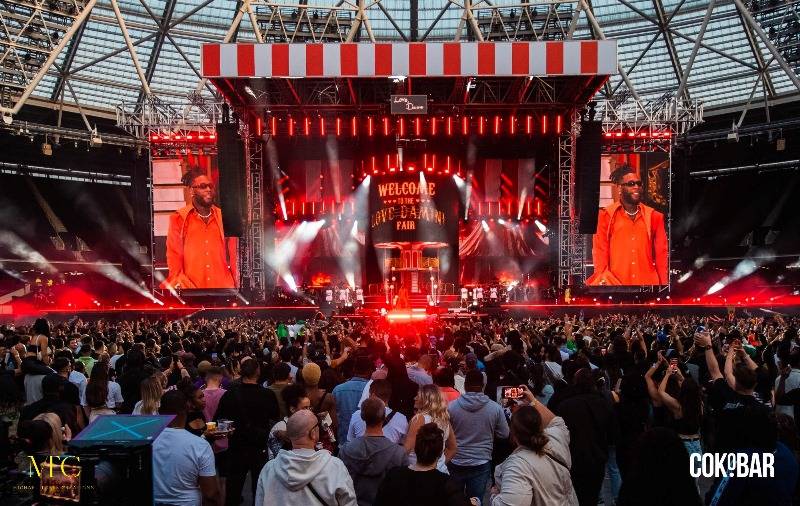
Burna Boy performed to 80,000 people at London’s Crystal Palace Park in August 2024. That same month, the naira was trading at over N1,600 to the pound. Both things happened at the same time, nobody connected them publicly about Nigerian Artists leaving.
That connection is the story Nigerian music refuses to tell itself honestly.
Afrobeats is the most exported sound Nigeria has ever produced. It has colonised global playlists, headlined Coachella, filled arenas on five continents, earned Grammy nominations, and made the word Lagos synonymous with music in a way that would have seemed fantastical twenty years ago. And the artists who built that sound Wizkid in London, Burna Boy between Lagos and Los Angeles, Tems in the UK, Rema expanding his base internationally, Ayra Starr building her profile in Europe are doing more of their living outside Nigeria than inside it.
This is not a coincidence. It is a structural consequence that Nigeria’s music industry conversation keeps dancing around without ever landing on directly.
They Came Here to Build. Now They’re Leaving to Sell.
Go back to the early 2000s and look at the direction of travel. Weird MC came from the United Kingdom to Nigeria. Don Jazzy and D’banj built Mohits Records in Lagos from the ground up after years abroad. Banky W returned from New York. MI Abaga came back from the United States. Davido left Atlanta and chose Lagos. Tiwa Savage left London, turned down a deal with Universal Music UK, and built her career in Nigeria.
These were not small decisions. These were artists choosing Nigeria over markets that already had working infrastructure, functioning royalty collection systems, stable currencies, and established industry pipelines. They chose Lagos because Lagos was where the creative energy was, and they believed that energy was worth more than the infrastructure they were leaving behind.
They were right. What they built between 2000 and 2015 the sound, the audience, the cultural confidence. That became the foundation for everything that came after. Afrobeats as a global phenomenon did not emerge from nothing. It emerged from the deliberate, often financially irrational decision of a generation of artists to bet on Nigeria.
Now look at the direction of travel today.
Wizkid has lived primarily in London for years. Burna Boy splits his time between Lagos, London and Los Angeles, with his management and major label infrastructure Atlantic Records based in the US. Tems is UK-based, Rema, whose Calm Down featuring Selena Gomez became the most globally exported Nigerian song of the last three years, is building his international infrastructure outside Nigeria. Ayra Starr, signed to Mavin Records under Don Jazzy the same Don Jazzy who once returned to Lagos to build is investing heavily in her profile in Europe and North America.
None of them have renounced Nigeria. Their music is Nigerian to its core. The centre of gravity for their careers has shifted westward and the reasons are not mysterious.
The Naira Does Not Lie
This is where emotion has to step aside and let the numbers speak.
Spotify paid Nigerian artists the equivalent of $39.47 million in 2025. That figure has barely moved in three consecutive years $39.5 million in 2023, $39.1 million in 2024, $39.47 million in 2025. The naira figure keeps growing because the naira keeps losing value, not because the real earnings are increasing.
A stream from a listener in Lagos generates a fraction of the royalty that a stream from a listener in London generates. Nigerian Spotify subscribers pay roughly N1,400 to N1,800 per month. A UK subscriber pays £10.99. The mathematics of streaming mean that an artist building their audience primarily in Nigeria is working harder for less money than an artist building the same size audience in Britain or America.
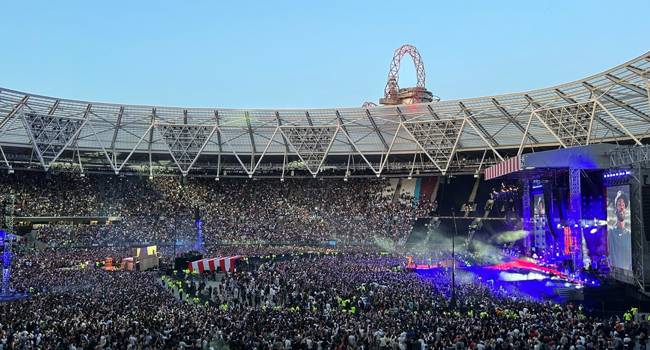
Concert economics tell the same story. Burna Boy’s Crystal Palace show at 80,000 capacity, with UK ticket prices, generated more revenue in one night than most Nigerian stadium shows generate across an entire tour leg. Wizkid’s O2 Arena shows in London sell out faster and at higher prices than comparable shows in Lagos. This is not because Nigerian fans love their artists less. It is because the purchasing power in those markets is structurally higher and the venue infrastructure to capture that purchasing power at scale exists there in a way it does not yet fully exist here.
Brand deal valuations follow the same logic. A brand deal negotiated in pounds or dollars is worth more in naira terms with every passing month. The incentive structure for a Nigerian artist at Wizkid or Burna Boy‘s level points overwhelmingly toward building their commercial infrastructure in Western markets.
What This Feels Like From Lagos
None of the above economic logic makes it feel less like loss to the people who stayed.
There is something genuinely painful about watching the artists who soundtracked your teenage years, who made Lagos feel like the centre of the world, operate increasingly from cities that are not Lagos. The shows they perform for audiences who do not know the streets those songs came from. The interviews they give to British and American outlets that had to be educated about what Afrobeats was five years ago and now speak about it with borrowed authority.
Nigerian fans are not wrong to feel this tension. The emotional contract between an African artist and their home audience is different from the contract between a Western pop star and their fans. Lagos gave these artists their sound, their slang, their emotional reference points, their first audiences. A sense that something is owed in return presence, loyalty, investment is not irrational. It is a completely human response to feeling like something that belonged to you is being packaged and sold somewhere else for prices you cannot afford.
Femi Kuti, son of Fela Anikulapo-Kuti, has said publicly that Nigerian artists need to invest more in building domestic infrastructure rather than chasing foreign validation. That argument carries weight not because relocating is morally wrong but because the pattern of leaving has compounding effects on what remains. When the biggest artists build their studios, management companies, creative teams and business relationships outside Nigeria, the infrastructure gap that made leaving attractive in the first place gets wider, not narrower.
The Part Nobody Wants to Say Out Loud
Here is the uncomfortable truth underneath all of it.
The artists who came back in the 2000s, Banky W, MI Abaga, Don Jazzy, came back to a Nigeria where being the biggest in Lagos meant being the biggest in the room. The market was domestic. The ceiling was Nigerian. The only way to reach the audience was to be physically present in the ecosystem.
Today’s artists face a different calculation entirely. Being the biggest in Lagos is a starting point, not a destination. The audience for Afrobeats is now genuinely global, reaching hundreds of millions of listeners across North America, Europe, East Africa, the Caribbean, Latin America. Managing a career at that scale from Lagos, against the backdrop of infrastructure challenges, currency volatility, power supply issues and a cost of living that has become increasingly punishing even for successful Nigerians, is genuinely harder than managing it from London.
The artists are not abandoning Nigeria. They are responding rationally to a set of conditions that Nigeria has not yet resolved. Blaming them for that response is the equivalent of blaming water for flowing downhill.
What Would Actually Change This
The conversation Nigeria’s music industry needs to have is not about loyalty. It is about infrastructure.
What would need to be true for Burna Boy to want to build his primary business base in Lagos? Stable and transparent royalty collection. Venue infrastructure capable of hosting 50,000 people with international production standards. A currency that does not lose 30% of its value in a year. Banking systems that can handle international transactions without the friction that currently makes doing business in Nigeria more expensive and complicated than doing business in London. Streaming platforms that pay Nigerian streams at rates that reflect the global value of the music being streamed.
Some of that is being built. Afrobeats-focused labels and management companies are growing in Lagos. Live Nation and international promoters are investing in Nigerian tour stops at a scale they weren’t five years ago. The ecosystem is developing.
But it is developing more slowly than the music is growing. And until that gap closes, the artists who built the biggest sound Nigeria has ever produced will keep doing more of their business in the cities that currently pay them what that sound is actually worth.
Don Jazzy came back to Lagos because Lagos needed building. The artists leaving today are not going because Lagos failed. They are going because what Lagos built became too big for Lagos to contain alone.
That is both Nigeria’s greatest achievement and its most urgent unfinished problem.