
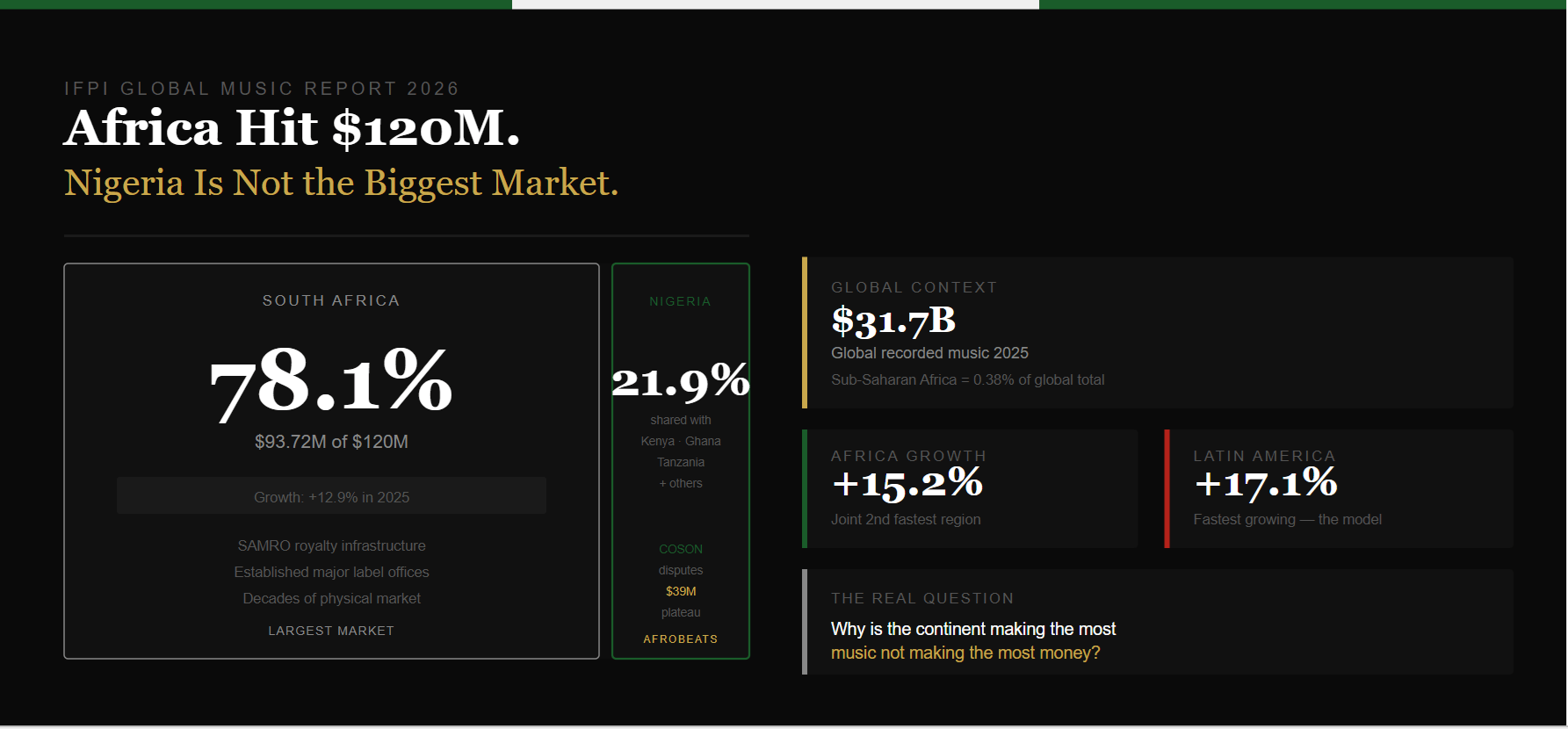
The number that matters in the latest IFPI Global Music Report is not the $31.7 billion headline. It is the much smaller African number sitting underneath it.
Sub-Saharan Africa grew 15.2% to $120 million in recorded music revenue. That sounds good until you ask the obvious follow-up: who actually collected it?
| IFPI figure cited | Value | What it describes |
|---|---|---|
| Global recorded music revenue | $31.7bn | Worldwide recorded music revenue in 2025. |
| Sub-Saharan Africa revenue | $120m | Regional recorded music revenue in 2025. |
| Sub-Saharan Africa growth | 15.2% | Regional recorded music revenue growth. |
| South Africa share | 78.1% | Share of the cited Sub-Saharan Africa revenue. |
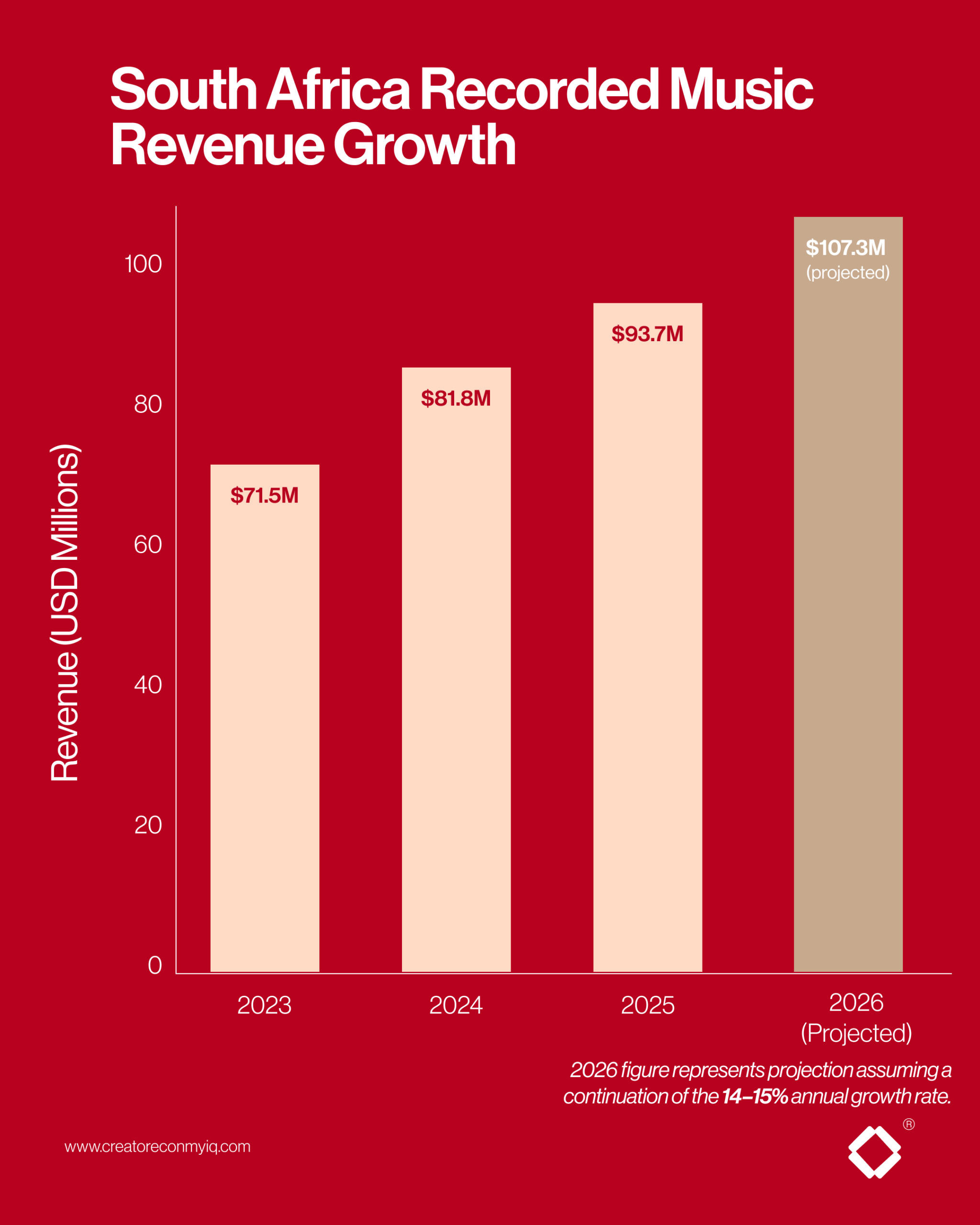
South Africa accounted for 78.1% of the region’s $120 million in recorded music revenue—about $93.72 million. The remaining 21.9% was shared across Nigeria and other Sub-Saharan markets. That contrast is striking given the international visibility of Nigerian artists, but the figures measure recorded music revenue, not cultural influence, live performance income or the full economic value of the music sector. They show a gap in reported market revenue; they do not, on their own, explain every reason for it.
What the IFPI Number Actually Says
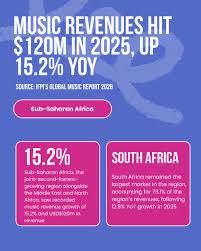
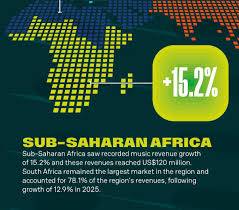
Sub-Saharan Africa saw recorded music revenue growth of 15.2% in 2025, reaching $120 million. South Africa remained the largest market in the region and accounted for 78.1% of revenues following growth of 12.9%.
To put those numbers in context: global recorded music revenues hit an all-time high of $31.7 billion in 2025, marking the eleventh consecutive year of growth. Sub-Saharan Africa’s $120 million represents 0.38% of global revenues. A region of over one billion people, home to some of the most streamed music on the planet, capturing 0.38% of the industry’s total value.
Angela Ndambuki, IFPI regional director for Sub-Saharan Africa, described the growth as reflecting a “sustained and powerful upward trajectory” driven by record company investment, the growing global influence of African artists, and increasing adoption of licensed streaming services.
The growth is real, but the starting point matters. A 15.2% increase on $120 million still leaves the region small in global terms, and South Africa’s 78.1% share makes Nigeria’s position look weaker than the headline suggests.
Why South Africa Takes the Lion’s Share
South Africa accounted for 78.1% of the regional total, but the report does not explain the gap by itself. Comparing the markets properly would require data on reporting coverage, revenue definitions, paid-streaming uptake, licensing and how royalties are collected in each country.
South Africa’s larger reported share may reflect a combination of established labels, royalty collection systems, paid-streaming uptake and other market conditions. The IFPI figures do not isolate the contribution of each factor, so they cannot by themselves prove that infrastructure explains the entire gap. Nigeria’s global visibility has not translated into a comparable share of reported recorded-music revenue.
The figures raise questions about how much value Nigeria captures from its music, but they do not measure every part of the business. Wizkid, Davido, Burna Boy, Tems and Rema have large streaming audiences, while the domestic collection and reporting of royalties remains an important industry issue. The Copyright Society of Nigeria (COSON) has faced public governance disputes over the years, but the IFPI figures do not quantify how those disputes affect Nigeria’s recorded-music revenue. A fuller assessment would need separate evidence on performance-rights collections, streaming payments, licensing and revenue reported by Nigerian rights holders.
IFPI‘s Ndambuki noted that addressing challenges such as streaming fraud and gaps in monetisation will be critical to ensuring that growth translates into lasting benefits for creators across the region. The report does not compare monetisation gaps between Nigeria and other countries, so it cannot establish that they are particularly acute in Nigeria.
The Global Numbers Put Africa in Perspective
Paid subscription streaming revenues increased 8.8% and accounted for more than half of global revenues at 52.4%. There are now 837 million users of paid streaming subscription accounts globally.
That 837 million figure is the one that should concern Nigerian music industry stakeholders. The global streaming subscriber base is enormous and growing. Nigeria’s contribution to that subscriber base paying users on Spotify, Apple Music, Tidal and other platforms is still relatively small. Most Nigerian music consumption happens on free tiers, on YouTube, on Audiomack‘s free service, or through informal channels entirely.
Globally, ad-supported streaming revenue grew 4.3% in 2025, compared with 8.8% growth for paid subscriptions. These are worldwide growth rates, not a comparison of per-stream payouts or a breakdown of Nigerian listening. Without country-level data on listening and platform revenue, the figures do not show what proportion of Nigerian artists’ streams came from free tiers or how much those streams earned.
Globally, artists’ share of industry revenues increased from 34.8% in 2024 to 35.5% in 2025, up from 31% in 2016, according to the report. Those are global figures; they do not tell us what share of revenue Nigerian artists receive from each platform, label or rights arrangement.
The Streaming Fraud Problem Nobody Is Talking About in Nigeria
IFPI CEO Victoria Oakley said streaming fraud is theft, plain and simple, and called on organisations with the scale and data to act decisively.
In January 2026, Deezer reported receiving more than 60,000 fully AI-generated tracks every day, with 85% of streams on AI-generated music across the platform in 2025 being fraudulent up 70% from the previous year.
This matters for Nigerian artists specifically because streaming fraud artificially inflated play counts using bots, fake accounts and AI-generated content, siphons royalty pool money away from legitimate artists. When the total royalty pool for a given period is divided among all streams, fraudulent streams reduce the per-stream rate for genuine music. Nigerian artists who are already generating lower-value streams from a market with low subscription penetration are further disadvantaged when fraud inflates the denominator.
Streaming fraud is not unique to Nigeria. The IFPI report identifies it as a global problem, but the figures cited here do not compare fraud rates or monitoring capacity between Nigeria and other markets.
Latin America Is the Model Nigeria Should Study
Latin America was the fastest-growing region at 17.1% year-on-year. It also consistently produces globally consumed music reggaeton, Latin pop, Brazilian funk from countries with economies that share some characteristics with Nigeria’s emerging market profile.
Several Latin American markets have seen strong growth in recorded-music revenue alongside globally successful local genres. Whether that growth reflects stronger royalty collection, subscription uptake, label partnerships or other factors varies by country; the regional growth figure alone cannot establish one model for Nigeria to copy.
Bad Bunny, J Balvin, Karol G and Peso Pluma generate enormous streaming revenues. Universal Music, Sony Music and local label structures in those markets capture a meaningful portion of that value flows back into Latin American music economies in ways that Nigerian music economics currently do not replicate. The comparison is not perfect but the direction of travel is instructive.
What $120 Million Actually Means for Nigeria
Nigeria’s global visibility might lead readers to expect it to account for a larger share of regional recorded-music revenue, but cultural reach and recorded-music revenue are different measures. The IFPI figures do not provide a formula for what Nigeria’s “proportional share” should be, and they cannot by themselves explain why South Africa accounts for most of the reported regional total.
A separate GYOnlineNG analysis of Spotify earnings in Nigeria estimated about $39 million in the period it examined. That figure and IFPI’s regional total measure different things and should not be added together or treated as interchangeable. Nigeria’s wider recorded-music economy also depends on physical sales, performance rights, licensing and other income streams, for which comparable, current public data can be difficult to assemble.
IFPI’s report is a useful snapshot, not the whole story. For Nigeria, the harder task is turning global consumption into more money captured by Nigerian rights holders, collection bodies and businesses.
African recorded music reached $120 million in 2025, but Nigeria did not take the largest share of it. The question now is whether the country can build enough domestic infrastructure to capture more of the value its artists are already creating abroad.