
One of the figures most often cited about the first Hallelujah Challenge is more than 60,000 people joining Nathaniel Bassey’s Instagram livestream at the same time on its first night in June 2017, alongside a reported 50,000 viewers on Facebook. If those platform figures are counted on a comparable basis, they suggest an unusually large audience for a Nigerian online worship event at the time. They are a snapshot of reported live viewership, not a count of unique people who participated throughout the event.
The interesting part was not simply that the livestream went viral. It was that people kept returning at the same time, every night, for an activity that asked them to do nothing except show up.
The audience growth quickly became a story beyond Bassey’s own followers. #HallelujahChallenge became a major Nigerian social trend, CNN reported on it within weeks, and celebrities including Funke Akindele, Don Jazzy and Toke Makinwa amplified it. The important shift was from an artist’s livestream to a public event people could invite other people into.
That combination of a fixed time, a simple format and a recognisable host turned a personal livestream into a repeatable audience habit. The technology mattered, but the behaviour mattered more: people had a reason to return at the same hour every night, and the community around the stream reinforced that habit.
The Man Before the Movement
Nathaniel Bassey was born on August 27, 1972. Before the Hallelujah Challenge made him a household name across Africa and the diaspora, he was already one of the most respected names in Nigerian gospel music. His song Imela, which means Thank You in Igbo, had become a worship standard in churches across Nigeria. He was known as a gifted trumpeter and vocalist whose ministry carried genuine spiritual weight.
But respect within the gospel music community is different from the kind of mass movement that the Hallelujah Challenge became. Bassey had an audience. What he did not have, before May 31 2017, was a platform that converted that audience into a nightly gathered community.
The idea came from a simpler place than most people assume. He had previously organised what he called the #TonguesChallenge, a period of concentrated prayer in tongues. The Hallelujah Challenge was the next expression of the same impulse gather people together online for focused, consistent praise at a specific time. The midnight hour was deliberate. It referenced the biblical account of Paul and Silas singing hymns at midnight in prison, and the walls falling as a result. The theme Olowogbogboro, meaning the God whose hands reach the unreachable, gave the first edition its spiritual frame.
What made it work was not the concept. It was the consistency. Every night. Same time. One hour. Bassey himself leading from his living room with no elaborate setup, no stage, no lighting rig. Just a man, a phone, and the presence of God he believed would show up when people gathered to praise.
The Night Nigeria Stayed Awake
Those who participated in the first Hallelujah Challenge in June 2017 describe something that is difficult to communicate to people who were not there. Nigerian internet data in 2017 was expensive and unreliable. Streaming a one-hour live video every night for thirty days required a commitment that was not casual. People set alarms for 11:45pm. They warned family members not to disturb them. They joined from bedrooms, from offices on night shifts, from study rooms in universities, from living rooms in the UK and US and Canada where the time difference meant 11pm Nigeria was either very late or very early.
The cost of participation was real and people paid it anyway. That is the most honest indicator of how much the movement meant to the people who joined.
The hashtag became a major faith-related trend among Nigerians on Twitter, and the format quickly moved beyond the livestream itself. Churches and prayer groups began adopting the idea of gathering people at the same hour, turning an online programme into something people could reproduce offline.
Participants shared testimonies during and after the first edition, including accounts of healing, financial change, answered prayer and restored relationships. These are personal accounts of faith, not independently verified measures of the programme’s effects. Within the community, however, testimonies have become an important part of how participants share their experiences and encourage others to return for later editions.
From Living Room to Movement
The Hallelujah Challenge is a bi-annual event usually for a period of 21 to 24 days. Each year, participants dedicate over an hour daily to prayer, praise, and worship throughout the challenge. What started as a personal experiment in his living room has now become a structured, bi-annual global event with its own website, its own app, its own festival and its own ecosystem of prayer partners across dozens of countries.
The 2025 edition attracted more than 1,500,000 viewers on YouTube and over 500,000 viewers per session on Facebook and Instagram. Those are not small numbers. Many mainstream entertainment events do not generate that kind of consistent nightly viewership across multiple platforms simultaneously.
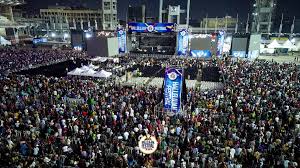
The Hallelujah Festival the physical gathering that now accompanies each edition has moved from intimate venues to major public spaces. In February 2026 the festival held at Tafawa Balewa Square in Lagos. The same square that hosts national celebrations and major political events. That transition from a living room Instagram live to Tafawa Balewa Square in less than a decade is one of the most remarkable growth stories in Nigerian spiritual culture.
Bassey has also taken the challenge beyond the expected. In 2025, as a birthday wish to himself, he took a special edition of the Hallelujah Challenge to Kirikiri Medium Security Prison, including food distribution and scholarships for selected inmates. The midnight praise that started on Instagram had found its way behind prison walls, which is exactly the kind of full-circle the Acts 16 theme Paul and Silas praising God in prison always pointed toward.
Why the Format Worked
Seen with hindsight, the format was unusually disciplined: one host, one time, one hour, every night. There was no ticketing barrier and very little production friction. The audience did the distribution through screenshots, posts, testimonies and personal invitations.
A Facebook user captured it at the time: “He’s on course to build the largest congregation ever with 1 phone and Instagram and Facebook.” Another observer noted the specific insight: “One lesson I have taken away is have a specific, consistent theme and go live at a time the audience would not be distracted.”
Consistency. Specificity. A time when the audience has nothing else competing for their attention. A clear reason to show up. Those are the principles that built the Hallelujah Challenge and they are the principles that every digital ministry and content creator since has been trying to bottle.
The challenge required nothing from participants except presence. No ticket. No registration. No subscription in 2017 when it started. Just show up at midnight and praise. That zero-friction entry point is why 60,000 people joined on the first night before there were any testimonies to point to or any social proof beyond Bassey’s own reputation.
Why It Has Not Stopped
Nine years after the first edition, the Hallelujah Challenge remains a recurring online worship programme. Unlike a one-off viral campaign, it gives participants a reason to return at set times and take part in a shared routine. Its continued editions suggest that the format has built a community beyond the initial social media moment.
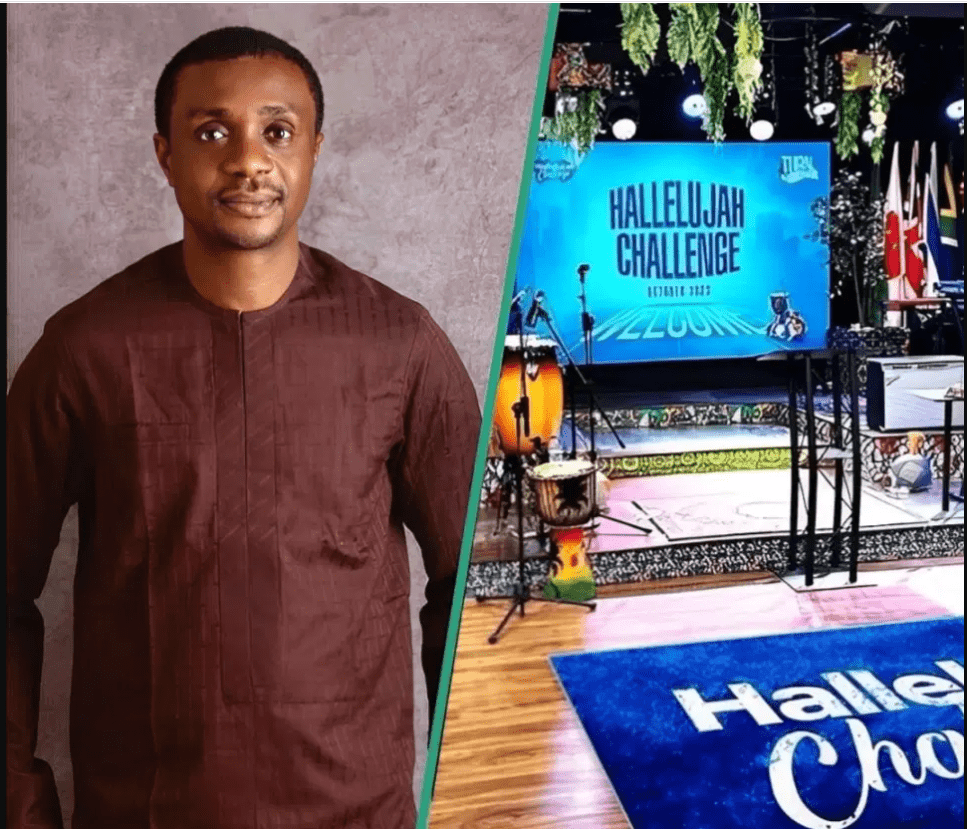
The reason it has not stopped is that the underlying need it meets has not changed. People need a gathered community. They need a specific time to step away from everything else and focus on God. They need the testimonies of others to strengthen their own faith. And they need the particular experience of collective worship at scale the feeling that you are not alone in your midnight, that hundreds of thousands of others are in their own rooms across the world, singing the same songs, believing the same things.
Nathaniel Bassey built something more durable than a viral livestream: a recurring community with its own calendar, rituals and physical gathering. Instagram was the original delivery system. It was not the whole business or the whole story.
That is the part worth remembering about the Hallelujah Challenge. The original product was simple. The hard part was getting people to come back.
The lesson is simpler than the hype around the numbers: the platform gave the movement reach, but the repeatable habit gave it staying power.