
Nigeria Made N60 Billion on Spotify in 2025: Here’s Why That Number Is Misleading
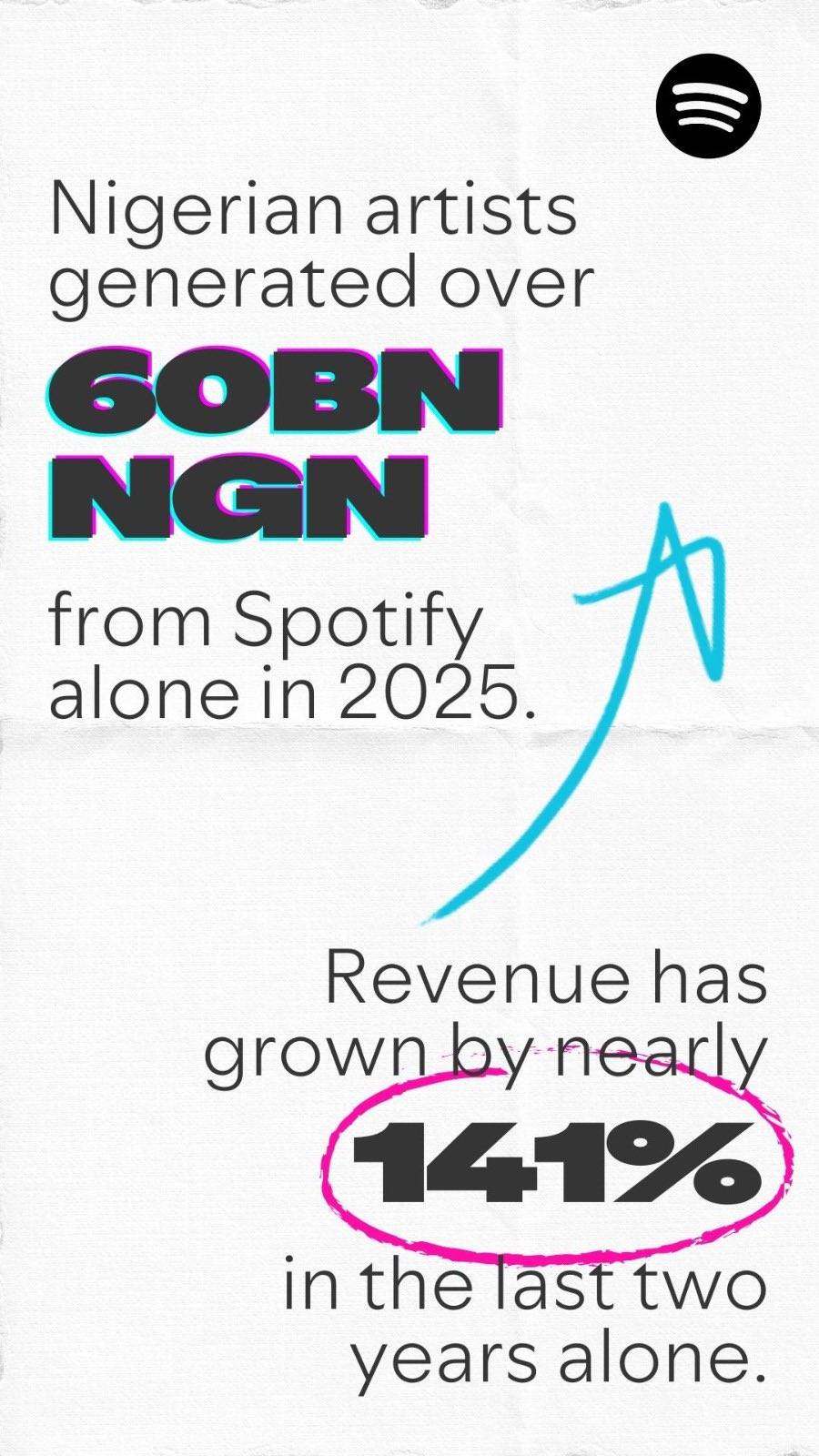
Every Nigerian music publication ran the same story last week, Spotify announced N60 billion with 140% growth, and 30.3 billion streams. Afrobeats is winning, the headlines wrote themselves and nobody asked the obvious follow-up question. What does N60 billion on Nigeria Spotify actually mean in 2025?
The Nigeria Spotify revenue story is more complicated than Spotify’s Loud & Clear report makes it look, and the part that matters most is the part that didn’t make any of those headlines.
What the Spotify Loud & Clear Report Actually Says
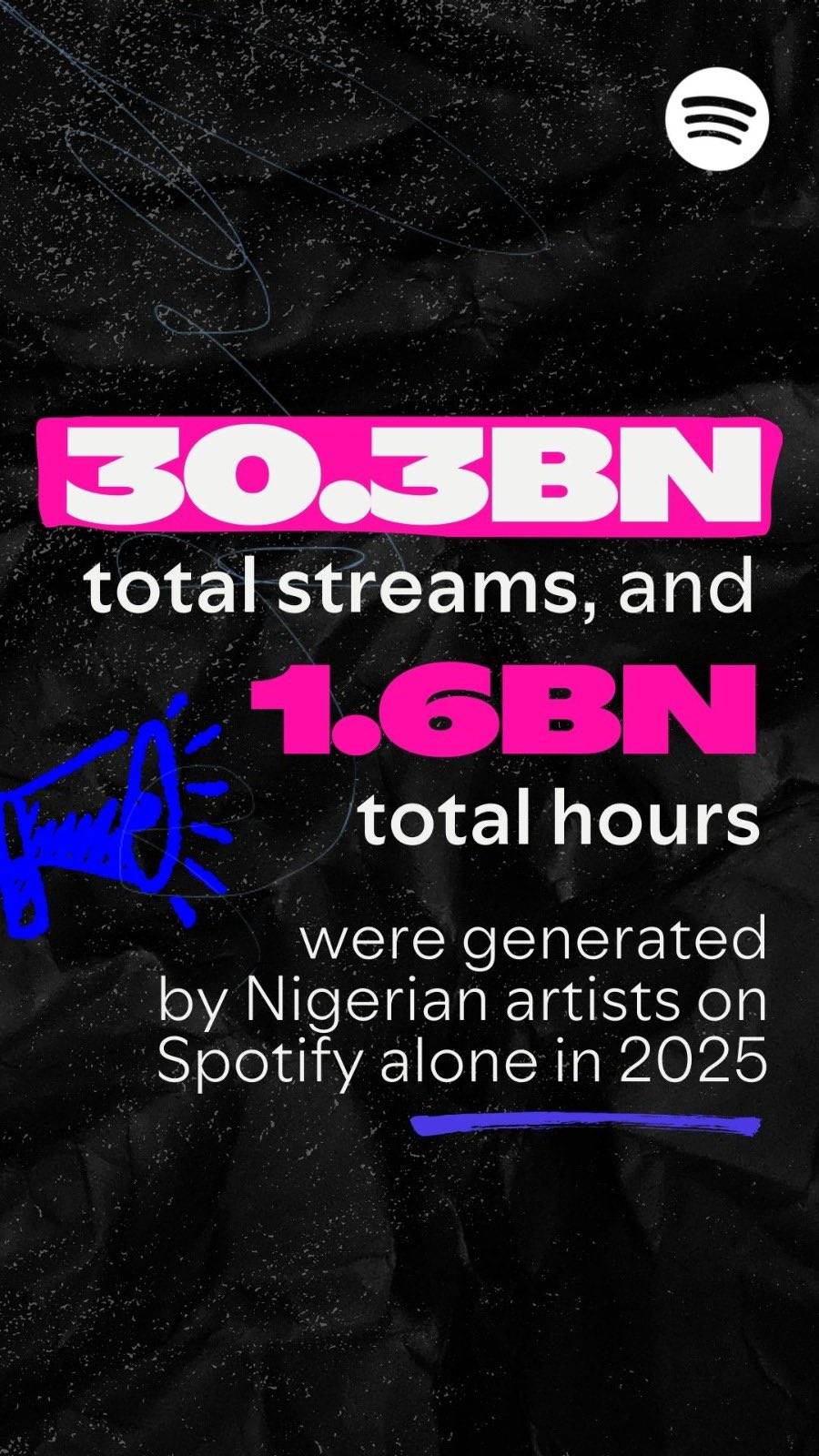
Spotify released its Nigeria-specific Loud & Clear data in Lagos on March 17, 2026. The headline figures are real. Nigerian artists generated over N60 billion in royalties on Spotify in 2025. They accumulated 30.3 billion streams and 1.6 billion listening hours. Nigerian music was discovered by first-time listeners more than 1.3 billion times, a 26% increase on 2024. Nigerian artists accounted for over 80% of tracks on Spotify Nigeria’s Daily Top 50.
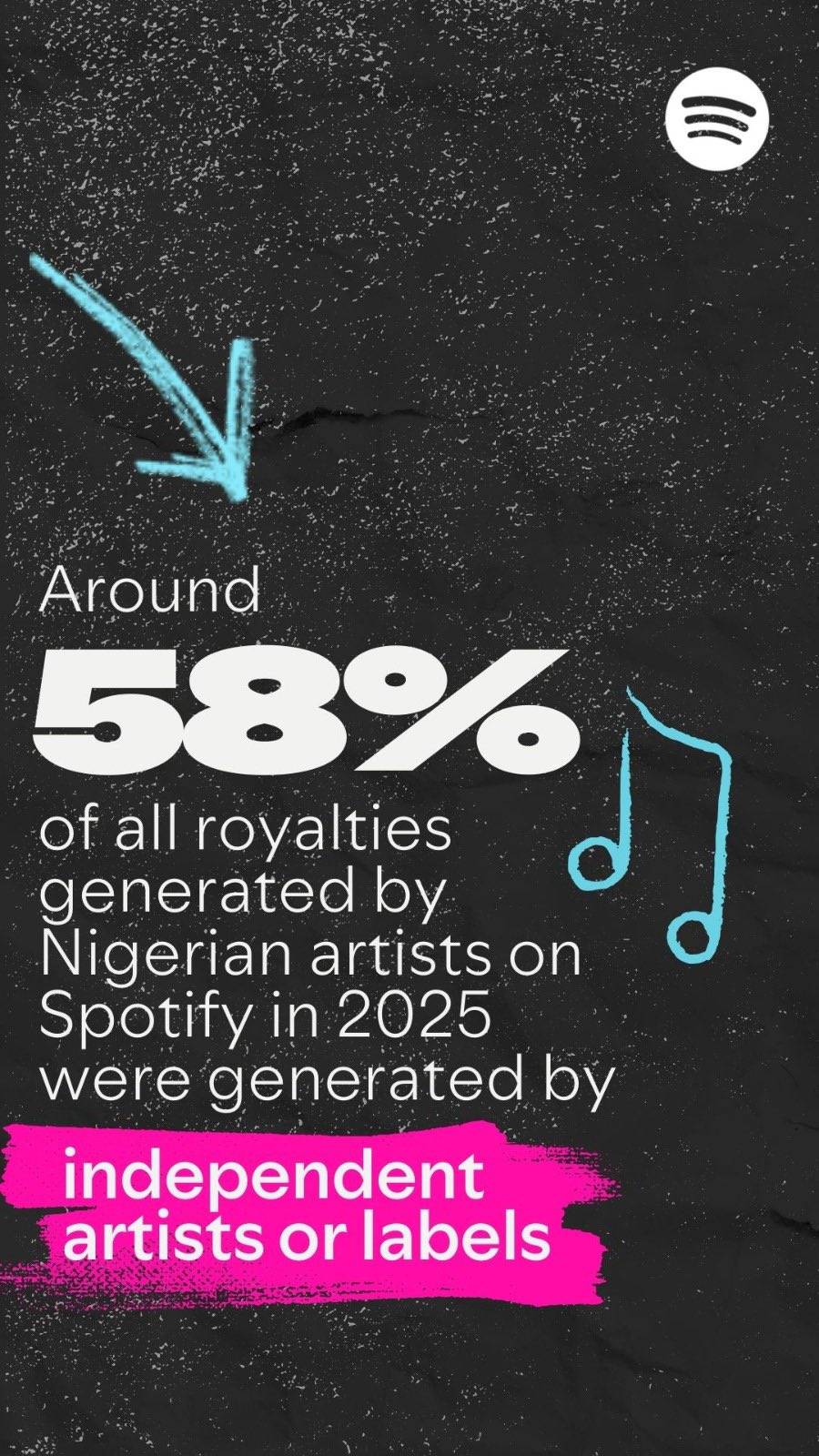
Those are genuinely strong numbers. The streaming engagement figures tell a story of a music culture that is deepening at home and expanding abroad at the same time. Local consumption of Nigerian artists grew by 170% year-on-year. Female artists saw local streams increase by 55%. Independent artists and labels generated 58% of all royalties, which signals that the industry is becoming less dependent on major label infrastructure to reach audiences.
Jocelyne Muhutu-Remy, Spotify‘s Managing Director for Africa, described Nigeria’s music ecosystem as one “building momentum at home, reaching new audiences at scale, and generating growing economic value.” That framing is accurate as far as it goes.
The problem is where it stops.
Nigeria Spotify: The Number Spotify Didn’t Headline
Spotify settles royalties in US dollars. The N60 billion figure is what artists received after Spotify converted those dollars into naira at the prevailing exchange rate. To understand whether Nigerian music is actually growing economically, you have to run the numbers in the currency they were paid in.
Here is what the naira figures look like when converted using the average annual exchange rate for each year:
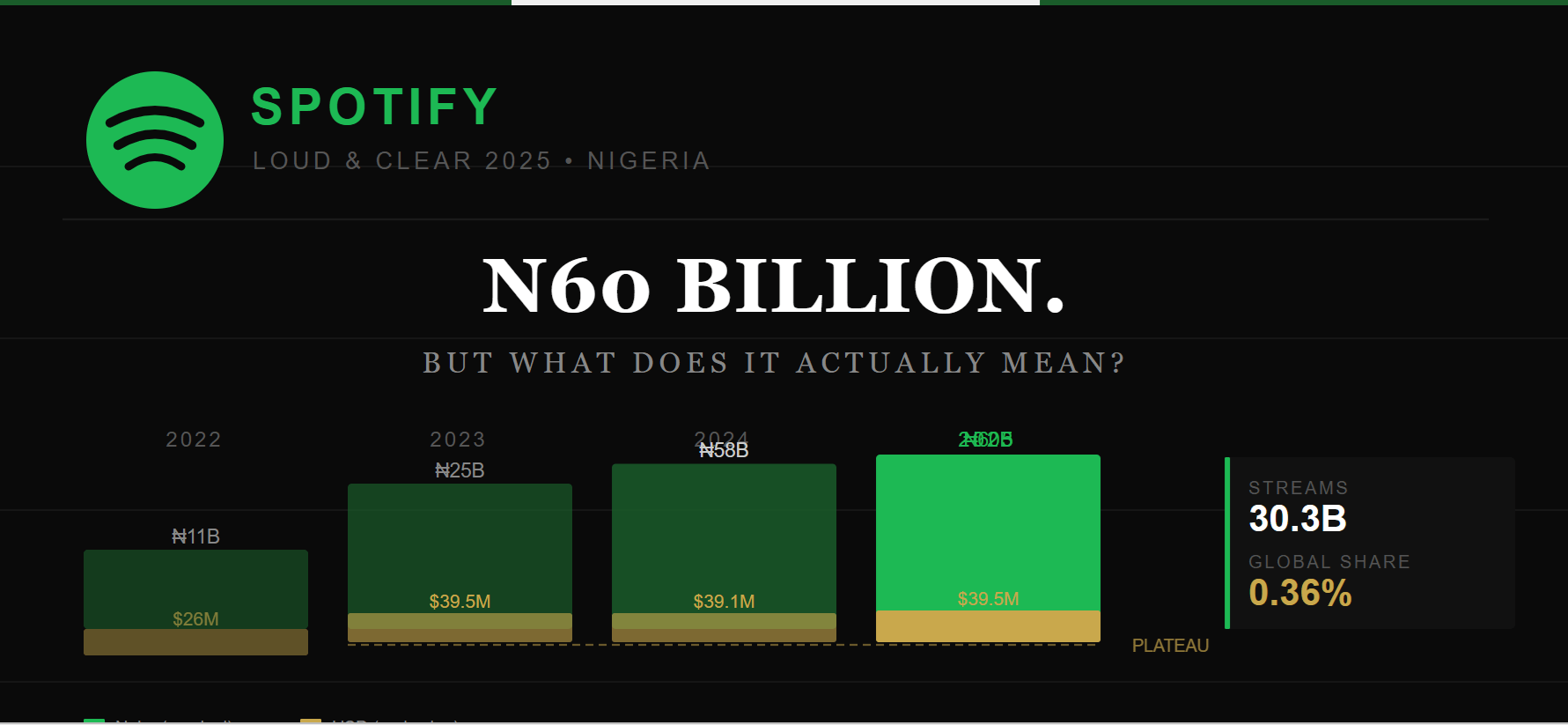
In 2022, Nigerian artists earned the equivalent of roughly $26 million from Spotify. In 2023, with the naira at an average of around N633 to the dollar, the N25 billion payout translated to approximately $39.5 million, a genuine 52% increase in real value. In 2024, with the naira averaging N1,482 to the dollar, the N58 billion payout came out to around $39.1 million, essentially flat, a 1% decline in real terms. In 2025, at an average rate of around N1,520, the N60 billion works out to approximately $39.47 million growth of less than 1%.
Nigeria’s Spotify earnings have been stuck at roughly $39 million for three consecutive years. The naira figures keep growing because the naira keeps losing value against the dollar, not because Nigerian artists are earning meaningfully more.
That $39.47 million represents 0.36% of Spotify’s $11 billion global payout in 2025. The United Kingdom alone generated around $1.13 billion roughly 10% of Spotify’s global total. Nigeria, with 30.3 billion streams, is sitting at 0.36% of global payouts.
Why Nigerian Streams Are Worth Less
This is the structural problem underneath the headline numbers and it doesn’t get discussed enough in Nigeria’s music industry conversations.
Spotify’s royalty rates are not fixed globally. They vary based on the subscription price in each market, the advertising revenue generated from free-tier listeners, and the overall size of the streaming economy in each country. Nigerian Spotify subscribers pay around N1,400 to N1,800 per month depending on the plan. A UK subscriber pays £10.99. An American subscriber pays $11.99.
When a listener in Lagos streams a Wizkid song, the royalty generated is a fraction of what the same stream generates from a listener in London. The per-stream rate in Nigeria is structurally lower because the subscription price is structurally lower. Nigerian artists accumulate billions of streams from Nigerian listeners but the economic return on those streams is limited by the local pricing environment.
This is not a Spotify-specific problem. Apple Music, Audiomack, Boomplay and every other streaming platform operates on the same basic logic. Revenue is tied to what subscribers pay, and what subscribers pay is tied to local purchasing power and economic conditions.
The practical implication is that a Nigerian artist with 500 million streams, the majority of which come from Nigerian listeners, earns significantly less than an equivalent artist whose streams come primarily from North American or European audiences. Rema’s Calm Down featuring Selena Gomez became the most exported Nigerian song globally for three consecutive years partly because of its popularity with US and Latin American listeners audiences whose streams carry higher monetary weight.
The Independence Question
The 58% independent royalty figure deserves more scrutiny than it received in most coverage. Spotify defines independent as any artist or label not owned by the three major global record groups: Universal Music Group, Sony Music Entertainment, and Warner Music Group.
Under that definition, companies like EMPIRE and ONErpm, which distribute music for some of Nigeria’s biggest artists and command significant market share in the Nigerian streaming economy, are classified as independent. These are not bedroom producers uploading tracks from a laptop. They are label services companies with proper infrastructure, A&R operations and marketing budgets that function similarly to what major labels do in mature markets.
The 58% independent figure is real but it doesn’t tell you that Nigerian music is dominated by small creators operating outside the system. It tells you that Nigerian music operates largely outside the Universal-Sony-Warner universe, which is a different and more nuanced story.
What Is Actually Growing
The streaming engagement numbers are where the genuine good news is. 30.3 billion streams. 1.6 billion listening hours. 1.3 billion first-time listener discoveries, up 26% on 2024. Nearly 2,000 Nigerian artists added to Spotify editorial playlists. Nigerian artists featured in 320 million user playlists globally.
These figures reflect real cultural reach. Afrobeats, Afropop, and the newer sounds emerging from Nigerian cities are finding listeners in markets where they had no presence five years ago. Odumodublvck, Seyi Vibez, Asake, Burna Boy and BNXN building audiences in the UK and parts of continental Europe represents genuine market expansion, not just domestic streaming volume.
The genre diversification data is worth paying attention to. Over the past five years, the genres with the fastest growth on Spotify in Nigeria are pop urbaine, alternative pop, anime, emo and drill. None of those are Afrobeats. Nigerian listeners are expanding what they consume, and some Nigerian artists are building audiences in genre spaces that have nothing to do with the Afrobeats wave that carried the industry to its current position. That diversification matters for the long-term health of the industry.
Female artists growing streams by 55% year-on-year is significant. Ayra Starr, Tems and Qing Madi are part of a generation of Nigerian female artists building genuine global careers on their own terms, not as features on male-led tracks.
The Bigger Picture Spotify Won’t Tell You
The $39 million plateau is a symptom of a deeper structural challenge. Nigerian music generates enormous streaming volume but converts that volume into revenue at a low rate because the majority of consumption happens in a market with low subscription prices and high free-tier usage.
The path to changing that is not more streams from Nigerian listeners. It is more streams from listeners in high-value markets. That means more Rema Calm Down moments. More Davido Coachella appearances & Tems Grammy wins driving new listener discovery in North America and Europe. Every stream from a US or UK listener is worth multiple times more economically than a stream from a Nigerian listener not because Nigerian fans are less valuable culturally, but because the economics of those markets are structured differently.
It also means the conversation about streaming platforms building sustainable royalty infrastructure within Nigeria itself matters. The International Federation of the Phonographic Industry annual report, expected later this year, will give a more detailed picture of how domestic market revenue has actually moved. That data will tell a more complete story than what Loud & Clear is designed to provide.
N60 billion is a milestone worth acknowledging. It reflects real creative output, real audience growth, and a music industry that is genuinely expanding in reach and influence. But the number that matters is $39 million, the third year in a row it has barely moved, and the question of what it takes to actually shift that ceiling is the conversation Nigeria’s music industry needs to be having right now.