
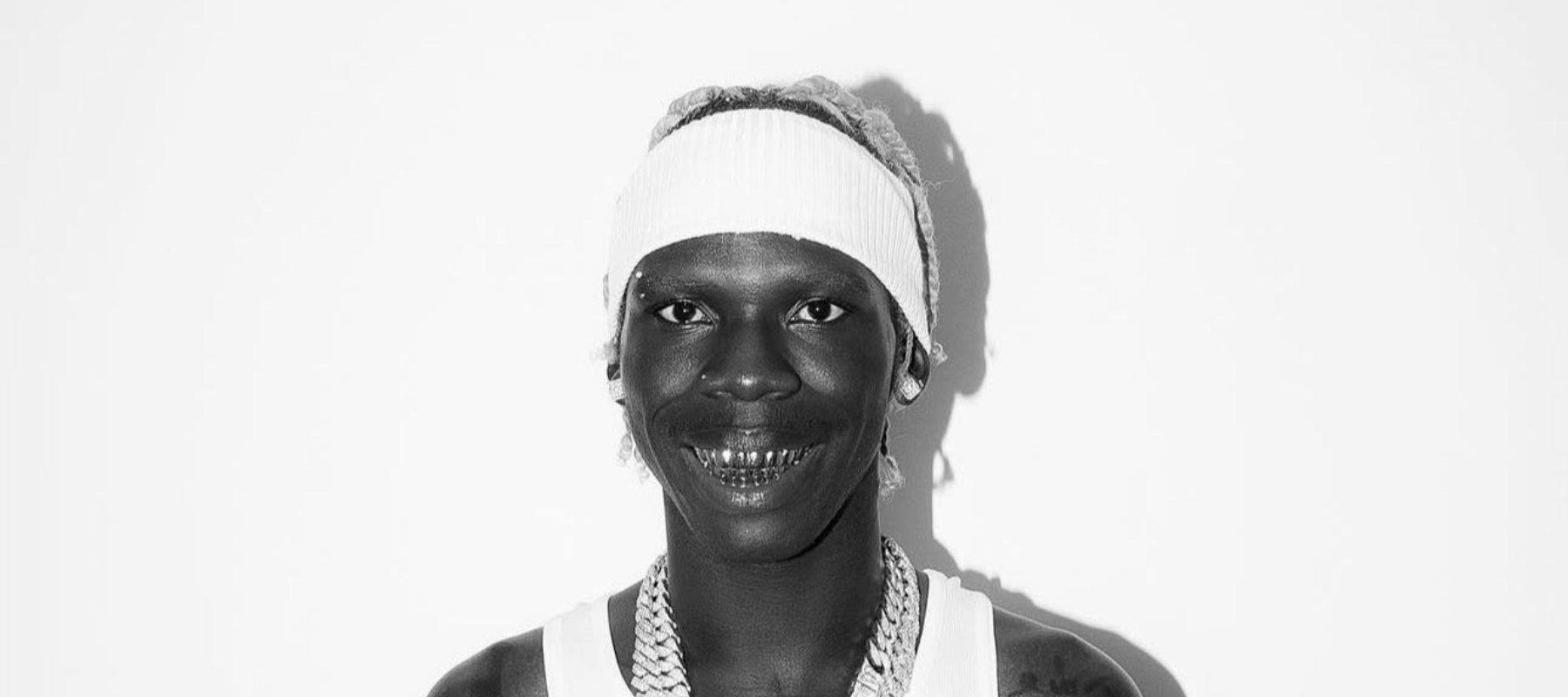
Before the chart positions and award nominations, Seyi Vibez was posting freestyles on Instagram and releasing music without the level of mainstream attention he would later attract. His rise is often told through the numbers that followed. The more useful question is how he built an audience before those numbers made him difficult to ignore.
Balogun Afolabi Oluwaloseyi was not discovered in the conventional way. He spent years putting out freestyles, testing songs and building an audience before the wider industry paid much attention. By the time the charts caught up, the fans were already there. NSNV — No Seyi No Vibez was the language that audience used for that loyalty.
This is the story of how that happened.
Ikorodu, Freestyles and the First Believers
He was born July 12, 2000 in Ketu, Lagos. Raised in Ikorodu. Enrolled at Lagos State University to study Sociology. And in the years before anyone knew his name beyond his immediate circle, he was documenting the process: freestyles on Instagram, raw performances on social media, the unpolished iterations of a sound he was still figuring out.
His single “Anybody” arrived in 2019. The early growth of an artist’s audience is difficult to reconstruct from public information alone, and it would be too neat to attribute the song’s movement to one channel. Peer sharing, social media posts and word of mouth are all plausible parts of the story; without campaign records, though, it is hard to measure how much each contributed.
Then came Godsent in 2020. And here the story begins to change shape. Because Godsent did not arrive with any infrastructure. It arrived with a melody built from Fuji cadences, Yoruba Islamic devotional patterns and the melodic sensibility of a young man who grew up hearing Wasiu Ayinde K1 in the background of his life. It was not the kind of song that usually gets pushed to Nigerian mainstream radio. Radio wanted cleaner Afropop. Godsent was something more specific. And that specificity was exactly why a specific audience grabbed it and held on.
The listeners who found Seyi Vibez in those early years were not casual. They were people who heard their own experience: the Lagos of bus stops and compound celebrations, the Yoruba Muslim household vocabulary, the street that most pop music aestheticises from a distance but rarely inhabits from the inside. They did not need a DJ to cosign him or a blog to feature him. They knew what they were hearing.
What Dapper Music Actually Did
In 2022 something changed. Dapper Music, the distribution arm of the Dapper Group, founded by Damilola Akinwunmi, known publicly as Dapper Damm, came into the picture.
Dapper Music was not a traditional record label in the full sense. It was a distribution company with strategic marketing capabilities. Its roster told you its philosophy: Omah Lay before he blew, Skiibii, producer Rexxie, Shallipopi, TI Blaze, Balloranking, BhadBoi OML. The label had a specific eye for raw talent that was already connected to street audiences and needed infrastructure to scale that connection.
What Dapper gave Seyi Vibez was not a sound. He already had that. It was architecture. Distribution to get the music onto platforms at scale. Strategic marketing support to amplify what organic momentum had already started. Promotional infrastructure that an artist managing his own releases from Ikorodu could not build alone.
The results were immediate and significant. His debut studio album No Seyi No Vibez dropped in 2021. In 2022 came Billion Dollar Baby and the Billion Dollar Baby 2.0 mixtape. The album peaked at number one on the TurnTable 50 Albums Chart. The single Chance (Na Ham) which won him the Headies, further reached number seven on the TurnTable Top 100 and debuted at number nineteen on the UK Afrobeats chart.
Here is the detail that reveals everything about how this partnership worked. Dapper Music‘s Vice President, Temitayo Ibitoye, known as Tee Y Mix , acknowledged in an interview that even at the height of Seyi Vibez‘s success, many people were unaware he was signed to their label. That is an extraordinary statement. The artist was number one on the album chart and the company distributing his music was effectively invisible to the public. The interview suggests that Dapper’s role was less visible to the public than Seyi Vibez’s success. It does not establish that the company deliberately stayed out of view, or how revenue and market share were divided between the parties.
In 2023 Seyi Vibez won Best Street-Hop Artiste at the 16th Headies Awards for Chance (Na Ham). He received a BET Viewer‘s Choice Best New International Act nomination in January 2024. He launched Vibez Inc., his own record label, and signed TML Vibez. He collaborated with Kizz Daniel on Jajoo and Zlatan on Let There Be Light. He featured with Olamide on Free alongside his signee Muyeez. He was operating at a level that the distribution partnership had made possible.
The Split and the Silence That Followed
In September 2024 the internet noticed something. Seyi Vibez had deleted every post from his Instagram. He had unfollowed Dapper Damm. His bio now read one word: Independent.
The immediate context was a cancelled Canadian tour. Nigerians in Toronto had bought tickets to a show that did not happen. The organisers cited circumstances beyond their control. The backlash was swift. A Dapper source told PM News that Seyi had messed up things for dapper management by cancelling all shows in Canada, adding that they were waiting for his return to Nigeria to resolve the matter.
What followed was the quiet kind of split that Nigerian music industry disputes usually become when both sides have something to protect. No public statement from either party. No legal proceedings made public. Dapper still had Vibez’s profile on their website for a period after the mutual unfollowing, indicating, or what one observer called a potentially one-sided split. The contract details were never disclosed publicly, though speculation suggested a distribution agreement that had run its natural course rather than a full label deal. The same structural arrangement that Asake has with YBNL and EMPIRE simultaneously.
The split was less useful as a morality tale than as a business decision. By then Vibez Inc. already existed, and Seyi had reached the stage where the infrastructure that helped him scale domestically was no longer the only thing he needed. We do not have the contract, so the exact reason for the separation should remain an open question.

NSNV Nation and the TikTok Covenant
While the industry was watching streaming charts and award nominations to understand the size of Seyi Vibez’s audience, his fans were building something on TikTok that the industry had no framework to measure.
The hashtag seyivibez has 1.8 million posts. That number is not the meaningful one. The meaningful one is what those posts contain. Fans posting their Spotify Wrapped screenshots with his name at the top. Fans tracking unreleased snippets from live performances and posting lyric edits before the songs officially exist. Birthday celebrations every July 12 where the NSNV hashtag trends independently. Concert review videos where the dominant emotion is not excitement but pride, the particular pride of someone who was listening before it was mainstream.
TikTok shows something the streaming figures alone cannot. Fans are not only listening; they are helping other listeners navigate the catalogue. When SHAOLIN arrived in 2024, reaction videos and snippet-driven posts appeared quickly because some fans had already been following the song before release. That makes the audience look less like a collection of individual streamers and more like a community that helps itself grow.
There is also a simpler signal: fans making “where should I start?” compilations for new listeners. A label can buy promotion around a release, but it cannot easily manufacture the feeling that existing listeners need to explain the back catalogue to newcomers.
His music travels on TikTok partly because it works for multiple content templates. The Fuji-inflected tracks anchor nostalgic and cultural content. The melodic street-pop songs power car POVs and evening vibe content. The devotional Arabic and Yoruba cadences work specifically for Muslim Nigerian creators in ways that most Afropop does not accommodate. Seyi Vibez’s music is specific enough to be useful for specific audiences and versatile enough to travel beyond them.
The Industry’s Uncomfortable Question
Spotify Nigeria’s 2025 year-end ranking placed Wizkid first and Seyi Vibez second, ahead of Burna Boy, Davido, Asake and Odumodublvck. That is a specific result for that year, not a permanent ranking of Nigeria’s biggest streaming artists.
For an artist without the global machinery attached to the Big 3, finishing second is significant. It suggests that domestic streaming scale can now be built without first following the same international route as the biggest Nigerian stars.
The Big 3 conversation Wizkid, Davido, Burna Boy is the frame through which Nigerian music currently understands itself at the highest level. Seyi Vibez does not fit that frame. He is not competing with them for the same global positioning. He is not building toward Coachella or the O2 Arena on any near-term timeline. He is building a substantial domestic audience, with Spotify’s 2025 year-end ranking placing him second in Nigeria behind Wizkid. That result suggests domestic streaming success does not always follow the same international path as the careers of the Big 3, but it does not establish the full size of his audience or the business infrastructure behind it.
The unresolved question is what happens outside Nigeria. UK dates, North American shows and a stronger European presence would turn domestic streaming strength into a wider touring business. The cancelled Toronto show was a setback, but it does not tell us how large the diaspora opportunity is by itself.
Vibez Inc. gives him a structure he controls, but that does not automatically solve the next problem: international booking, marketing, partnerships and distribution at scale. Whether he builds those capabilities himself or brings in outside partners is probably the more important business decision of the next phase.
The Man Behind the Numbers
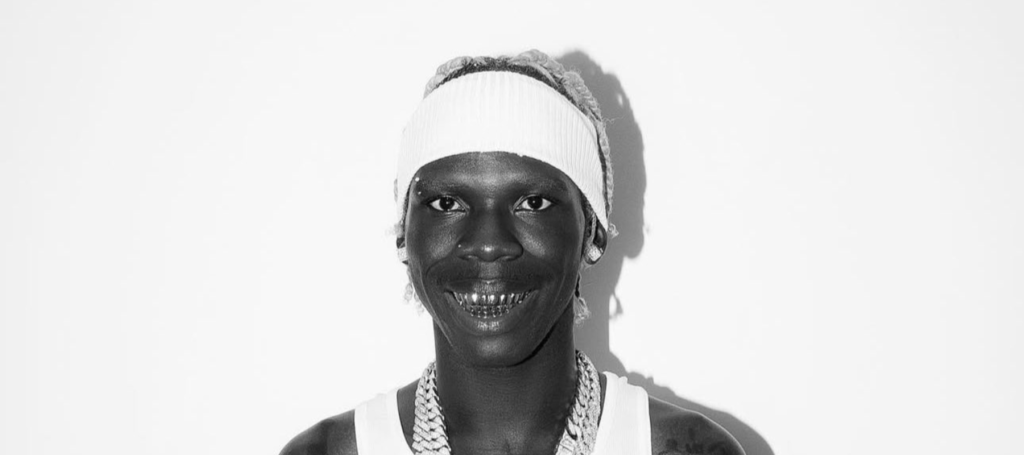
Balogun Afolabi Oluwaloseyi has a daughter. He lost his mother in March 2023 and described it as the darkest day of his life, noting that he had bought a house to surprise her and she died before he could give it to her. He documented his grief publicly and then went quiet about it, which is the mark of someone who understands the difference between sharing and performing.
Burna Boy told him in January 2024 to show no sign of weakness and keep moving. He quoted that line publicly. It is the kind of advice one takes from someone who has lived through the specific grief of losing a parent while being a public figure, which Burna Boy had done years before. The line was not empty motivation. It was hard-won instruction from someone who understood the terrain.
He was also once duped while trying to join Wizkid‘s label, a detail he has spoken about publicly, which grounds the origin story in the reality that most Nigerian artists face before they arrive anywhere. The path from Ikorodu freestyles to number two on Spotify Nigeria was not clean or straight. It passed through failed attempts, industry indifference, a distribution partnership that built his commercial career and then ran its course, a cancelled tour that became a public controversy, and the kind of personal loss that restructures a person’s relationship to everything including their work.
That context matters because the audience did not arrive only for a marketing campaign. It formed around the music, then kept reinforcing itself. NSNV is useful shorthand for that relationship, whatever Seyi Vibez decides to do with it next.
No Seyi. No Vibez. For now, the numbers suggest his audience still means it.
The industry is still figuring out what to do with that equation. His audience settled it years ago. For broader context on Nigerian label, distribution and artist structures, see our Nigerian music business guide.