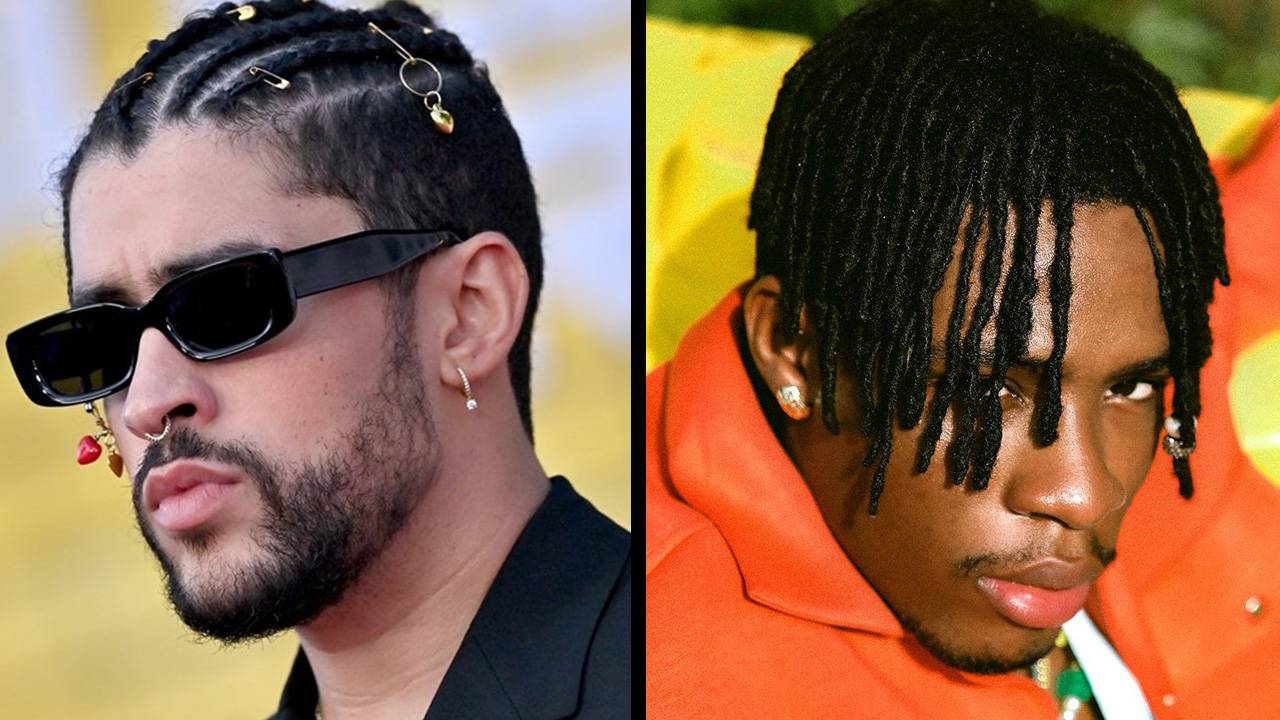
Joeboy, Bad Bunny, and the $465,000 Question Nigerian Music Cannot Afford to Ignore
Bad Bunny did not steal Joeboy‘s music. That is the first thing to say clearly, because the conversation around this case keeps collapsing into the wrong argument. The Joeboy Bad Bunny copyright case is indeed a landmark moment for the African music industry, serving as a lesson on how global IP rights works.
What actually happened is more uncomfortable than theft, and more instructive than a story about a Puerto Rican superstar disrespecting African artists. What happened is that a Nigerian label walked into a US federal courtroom to fight for the intellectual property rights of one of its artists, and when the court asked them to prove they owned what they said they owned, they could not do it convincingly enough to stay in the fight.
Bad Bunny is now asking a court to order emPawa Africa to pay $465,612 in legal fees after the copyright case over his song “Enséñame a Bailar” collapsed in March 2026. That number is the headline. But the story underneath it is about something Nigerian music has been quietly avoiding for years.
What Actually Happened in Court
The timeline matters because the collapse was procedural, not substantive. Nobody ruled that Bad Bunny was innocent of interpolating Joeboy‘s “Empty My Pocket.” The judge dismissed the case because the people bringing it stopped showing up.
Nigerian producer Dera, whose full name is Ezeani Chidera Godfrey, alongside Ikenna Nwagboso, co-founder of emPawa Africa, claimed that “Enséñame a Bailar”, a track from Bad Bunny’s Un Verano Sin Ti — used an uncleared sample from “Empty My Pocket,” which Dera had produced for Joeboy. They wanted $25 million in damages.
The whole thing fell apart when Dera’s lawyers quit in January 2026, citing “irreparable differences” over legal strategy. After Dera failed to show up for a February 5 discovery hearing and missed a March 6 deadline to keep the case alive, Judge Otis D. Wright II dismissed the lawsuit with prejudice — meaning it cannot be refiled.
In a motion filed on March 23, Bad Bunny‘s attorneys stated that the case was “meritless from the beginning and should never have been brought,” arguing that emPawa filed and aggressively litigated it hoping that Bad Bunny’s wealth, prominence, and desire to avoid bad publicity would enable them to extract an undeserved multimillion-dollar settlement.
That is the winning side’s framing. It is designed to be aggressive. But the damning line in the entire case is not from Bad Bunny’s lawyers. It is from the court motion itself.
“When faced with an imminent court order that would require it to explain how it owned Empty and Lakizo did not, emPawa chose instead to abandon its claims altogether.”
That sentence is the whole story.
The Lakizo Problem Nobody Wants to Name
To understand what that sentence means, you need to understand Lakizo Entertainment.
Lakizo Entertainment served as the licensed distributor for “Empty My Pocket” when it was released. Rimas Music, Bad Bunny‘s label, claimed it purchased the master recording from Lakizo, who was listed as the track’s creator and owner in numerous public sources.
emPawa’s response was that Lakizo was only ever a distributor, not an owner, and that Joeboy and Dera remained the actual creators. Their position was that no one should confuse Rimas’ payment to Lakizo Entertainment for the master with a publishing clearance, and that Lakizo’s only creative contribution to the recording was adding its “It’s Lakizo, baby” tag at the 0:07 mark.
That argument is legally coherent. The problem is that when a US federal court asked emPawa to prove it in discovery to produce the unredacted contracts that demonstrated they held ownership over Lakizo the label responded with what Bad Bunny‘s lawyers described as “frivolous objections” and delays. When its own attorneys withdrew, emPawa Africa did not hire new counsel. It abandoned the case.
There are two possible explanations for that abandonment. Either the ownership documentation was not strong enough to withstand federal discovery. Or the cost and complexity of continuing without original counsel was simply too high for a Lagos-based independent label fighting in a Los Angeles courtroom against one of the world’s most commercially powerful artists.
Both explanations are damning in different ways. The first is a documentation problem. The second is an infrastructure problem. Nigerian music has both.
This Is Not the First Time. It Will Not Be the Last.
Mr Eazi himself drew the historical line in 2023 when he first went public with the case, referencing Michael Jackson’s adaptation of Cameroonian musician Manu Dibango‘s “Soul Makossa” on Thriller’s “Wanna Be Startin’ Somethin'” decades earlier. He described it as part of a broader pattern in how the wider music industry approaches the intellectual property of African artists, noting that Afrobeats has become a global phenomenon and everybody wants to sample a piece of it, while Afrobeats artists and their producers often have to pursue legal means to secure publishing and royalties after songs they originally created are co-opted without credit.
He was right about the pattern. But the Joeboy case adds a new dimension to that pattern — because the problem here was not purely that a foreign artist took African music without credit. The problem was that when African music went to court to defend itself, the ownership chain behind that music was not documented cleanly enough to survive the scrutiny.
We wrote last month about Burna Boy’s early catalogue dispute the case involving Aristokrat Records, 960 Music and the question of who actually owns L.I.F.E and Redemption. That case is still being fought in Nigerian courts. The underlying problem in both cases is identical. Nigerian music ownership documentation was built for an era when the stakes were domestic and manageable. It was not built for an era when your song can end up on a Puerto Rican superstar’s album that debuts at number one on the Billboard 200 and spends 13 weeks at the top.
What $465,000 Actually Represents
The legal fee demand is significant beyond its dollar amount. Bad Bunny’s attorneys specifically noted that they were not seeking reimbursement from Dera personally, stating they believed the producer was not primarily responsible for the prosecution of the lawsuit, nor did he finance it placing responsibility squarely on emPawa Africa’s legal strategy.
That framing matters. It means Bad Bunny’s team is making a public argument that emPawa, as a label institution, made a strategic decision to litigate a case they could not ultimately support with documentation, in the hope that the cost of fighting it would force a settlement. Whether that characterisation is fair is a question for the court. But it is the argument that will be on record if emPawa chooses to contest the fee demand.
For a Lagos-based independent label, $465,612 is not a routine litigation cost. It is a number that could affect operations, artist signings, and the label’s ability to continue functioning as the infrastructure it was built to be for emerging Nigerian artists.
The Lesson Nigerian Music Cannot Keep Avoiding
The Joeboy and Burna Boy cases, arriving in the same month, make the same argument from two different directions.
Nigerian music has built one of the most globally consumed sounds in the world. The artists who carry that sound are now performing at Coachella, filling arenas in London, headlining Soundstorm in Riyadh. Wizkid, Davido, Tems and Rema are building permanent audiences in markets where Afrobeats barely registered a decade ago. The music is operating at a level that no one involved in making it in 2010 could have predicted.
The legal and ownership infrastructure has not kept pace.
When a Nigerian song gets sampled by a global artist, the chain of ownership, who holds the master, who holds publishing, what a distributor’s contract actually entitles them to sign away, what documentation can withstand federal discovery in a US courtroom needs to be unambiguous. It currently is not, in too many cases.
The solution is not simple. It requires better contract practices at the label level, stronger documentation standards for distribution deals, clearer publishing registration, and in some cases legal infrastructure that can match the scale of the fights that Nigerian music will increasingly be asked to have internationally.
Mr Eazi built emPawa Africa specifically to give Nigerian artists and producers better infrastructure than the generation before them had. The Joeboy case does not negate that mission. But it is honest evidence that the infrastructure is still not where it needs to be for the world that Nigerian music is now operating in.
Joeboy‘s vocals are on that Bad Bunny record. Dera’s composition is in it. Anyone who listens to both songs understands that. The court did not rule otherwise. The court ruled that the case died for procedural reasons before anyone had to decide on the substance.
That is not a vindication. For Nigerian music, it is a warning.