
Suno Just Hit $300 Million: Here Is What That Actually Means for Nigerian Music
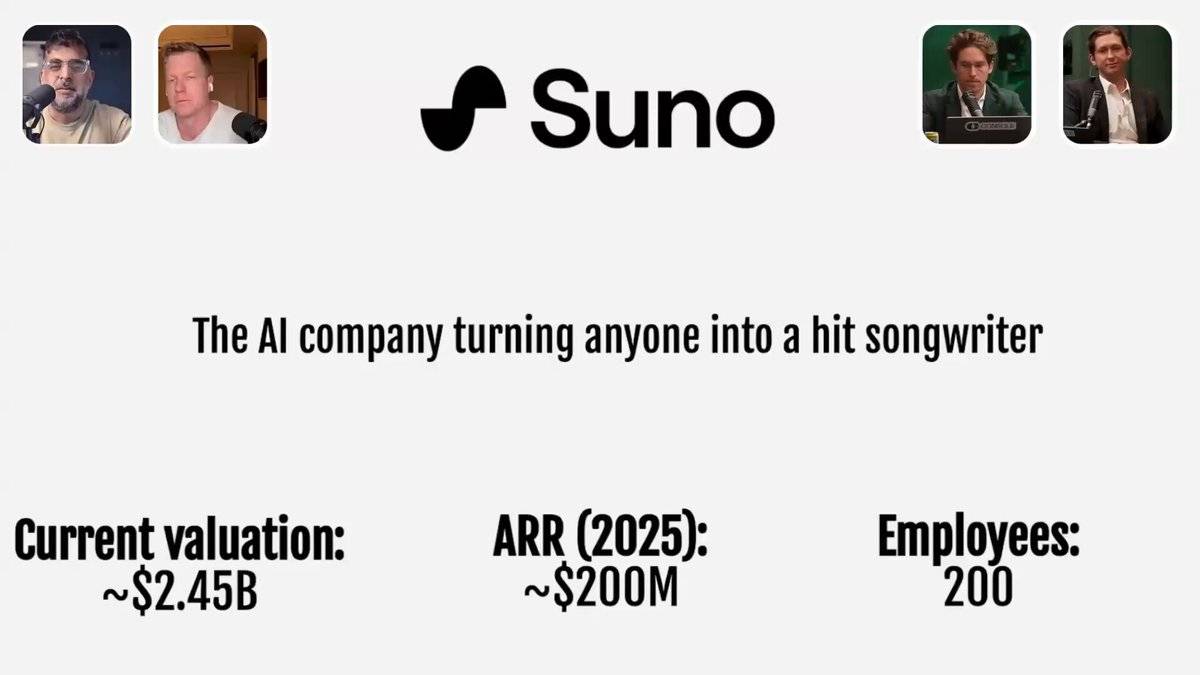
In February 2026, Mikey Shulman, the CEO of Suno, posted a milestone on X. Over 100 million people worldwide had used his platform. Two million of them were now paying subscribers. Annual recurring revenue had hit $300 million up from $200 million just ninety days earlier. The platform was generating 7 million songs every day, so what does AI Music Nigeria future holds.
Pay $15/month and boom, you're a musician.@suno just hit $300M ARR, letting anyone create songs with AI in seconds.
— My First Million (@myfirstmilpod) March 28, 2026
The brutal side:
Backup singers humming along for 20 years could see their revenue drop to effectively zero.
The math: SoundCloud has 40M real musicians.… pic.twitter.com/uQ6wk58cbE
Pay $10 a month and write a text prompt. Suno handles the melody, the lyrics, the arrangement, the production, the vocals. In seconds. No instrument required. No studio required. No producer required. No years of learning required.
For Silicon Valley, this is a democratisation story. For the Nigerian music industry, it is something more complicated.
The Number That Should Make Lagos Pay Attention
SoundCloud has roughly 40 million musicians on its platform. That took 15 years to accumulate. Suno’s addressable market is not musicians. It is everyone who ever wished they could make music — a number that runs into the billions.
The platform jumped from $200 million to $300 million in annual recurring revenue in approximately 90 days, which is an unusually fast monetisation trajectory for any consumer AI product. Menlo Ventures, the lead investor in Suno’s $250 million Series C, with participation from Nvidia’s NVentures and Lightspeed Venture Partners,, noted that word-of-mouth was the primary growth driver — users sharing songs over group texts rather than through traditional marketing. That is not a technology adoption curve. That is a cultural behaviour change.
Sony Music Entertainment and Universal Music Group are still actively suing Suno for copyright infringement, arguing its models were trained on copyrighted recordings without permission. Warner Music Group, which was part of the original suit, settled in late 2025 and signed a licensing deal allowing Suno to build models using music from its catalogue. The pattern is familiar. The industry fights the new technology, loses the battle of adoption, and eventually signs a deal. It happened with iTunes. It happened with Spotify. The question is not whether AI music platforms will be normalised. They already are.
What matters for Nigeria is a specific question: whose music trained these models, and who benefits when those models generate something that sounds like it came from Lagos?
It Has Already Arrived in Nigeria
The Nigerian data is not theoretical. In 2025, Urban Chords, an AI studio, released a compilation titled Choir Refix that debuted at number 43 on the Nigerian Official Top 100 Albums chart, accumulating 834,000 on-demand streams. An AI project, trained on human-made music, charting on the same chart as Wizkid, Asake and Seyi Vibez. The infrastructure of Nigerian music reception did not distinguish between them.
Nigerian singer FAVE’s single Intentions from July 2025 received a new AI version from Urban Chords that went viral. FAVE then officially re-released the track in collaboration with Urban Chords. The video circulated widely on TikTok before she made the move official. That decision is the most instructive data point in the Nigerian AI music conversation so far. A human artist found that an AI version of her song generated more traction than her original release and responded by absorbing the AI version into her official catalogue rather than fighting it. Whether that is pragmatism or capitulation depends on how you believe this plays out.
Nigerian producers Mykah and Eclipse Nkasi have already released AI-generated Afrobeats albums. Kumi Bora, described as an emotionally intelligent AI artist making Afrobeats music, exists as a non-human entity generating music in the genre. Eclipse Nkasi has said publicly that producing his AI album took $500 and three days, compared to thousands of dollars and three months without AI tools.
A 2025 survey by Deezer and Ipsos across 9,000 respondents in eight countries found that 97% of participants could not reliably distinguish between fully AI-generated music and music made by humans. That number is the most important statistic in this entire conversation. If listeners cannot tell the difference, the market does not automatically protect human creators.
What Suno’s CEO Actually Believes
Suno CEO Mikey Shulman found himself in controversy when he claimed “It’s not really enjoyable to make music now” on a podcast, arguing it takes too long to learn an instrument. That statement is worth sitting with. The person building the platform that generates 7 million songs a day does not believe the process of learning to make music is worth the time. His product is built around that belief.
Shulman’s framing positions Suno against what he calls the cultural flattening of algorithmic content feeds, arguing that “endless scrolling and passive consumption have flattened culture.” His solution is a platform where anyone can generate whatever they want to hear.
The argument sounds reasonable until you consider what it erases. The years Kel-P spent learning production before he made the beats that defined a generation of Nigerian music. The decade Pheelz invested in understanding arrangement and melody before Finesse arrived. The time Wizkid spent in Ojuelegba absorbing sounds that could not be arrived at through a text prompt. These are not inefficiencies to be optimised away. They are the source of the cultural specificity that makes Nigerian music worth the global attention it currently receives.
A platform that generates Afrobeats from a text prompt is generating approximations of a sound whose value comes precisely from the human experience that produced it. That is not a technology argument. It is a cultural argument. And it matters because the two billion people Suno’s investors believe are the addressable market will not necessarily understand or care about the distinction.
Who Gets Hurt First with AI Music Nigeria
The conversation about AI music almost always reaches the same images: the Grammy-winning superstar, the global arena, the artist too big to be displaced. That is the wrong frame.
Wizkid will not be displaced by Suno. Neither will Burna Boy, Davido or Tems. Their value is not primarily in the technical act of music generation. It is in the identity, the biography, the live experience, the cultural weight that audiences project onto them. You cannot generate a Burna Boy concert experience from a text prompt.
The people who get hurt first are further down the chain. The session vocalist who sings backgrounds on three albums a year and earns her income from studio fees. The producer who makes a living crafting beats for mid-tier artists who are not yet at the level where they can afford top-tier production. The jingle composer who provides original music for Nigerian television commercials and radio spots. The sync composer whose business is creating music for film and corporate video productions. These are the people whose specific economic function creating competent, professional-sounding music efficiently and affordably is exactly what Suno and its competitors are selling at $10 a month.
Suno’s tiered pricing runs from free for 10 songs per day to $10 per month for 500 songs and $30 per month for 2,000 songs. At $10 a month a marketing team can generate all the background music it will ever need for its social media content. At $30 a month a content creator can produce original-sounding tracks for every video they ever make. The session vocalist and the jingle composer are not competing with that on price.
The Afrobeats Specific Problem
The copyright lawsuit that major labels filed against Suno is not just about protecting the revenue of established Western artists. It is about the training data question, whose music taught these models to sound like music?
Afrobeats reached the global mainstream relatively recently. Its sonic vocabulary, the specific drum patterns, the melodic approach, the rhythmic feel that makes it identifiable, was built over decades by Nigerian artists and producers working in Lagos studios and building a sound from the inside out. When Suno generates an “Afrobeats track” from a text prompt, it is drawing on patterns learned from recordings those artists made. The compensation structure for that training, if it exists at all, has not been disclosed.
Warner Music Group‘s settlement with Suno allows the platform to build models using music from its catalogue. Sony Music Entertainment and Universal Music Group are still in active litigation. The major Nigerian artists signed to these labels: Tems on RCA Records, Burna Boy on Atlantic Records are technically covered by these proceedings. The vast majority of Nigerian artists who are independent, distributed through EMPIRE, ONErpm, Dapper Music, Audiomack or Distrokid, are not part of any discussion about how their music was used to train models that now compete with them.
The Question Nigerian Music Needs to Answer
Nigerian music industry voices are divided. Osarumen Osamuyi, producer and technology analyst, argues that human-led, AI-assisted workflows will dominate. Audiomack co-founder and CMO David Ponte sees the shift toward democratisation accelerating. Mavin Records A&R professionals are watching carefully.
The honest position is that AI music tools are already being used by Nigerian producers and the question is not whether to engage with them but how. Eclipse Nkasi’s $500 album in three days is one version of that engagement. Pheelz using AI tools to test ideas faster while keeping final creative decisions in human hands is a different version. FAVE absorbing the AI version of her song into her official catalogue is a third version.
None of those positions is automatically right or wrong. But they represent different bets about where the value in music is going to live.
If the value lives in the final product, the sonic output, then AI tools will eventually produce outputs indistinguishable from human work. The 97% figure from the Deezer survey suggests that is already close to true for passive listeners.
If the value lives in the identity behind the music, the story, the biography, the authenticity of a human being expressing something specific about their experience, then AI cannot replicate that. Seyi Vibez’s audience does not follow him because his beats are technically superior to what a model could generate. They follow him because the music is specifically his, made from a specific life lived in Ikorodu.
The outcome of this depends partly on what audiences decide to value, and partly on what the music industry builds to protect and distinguish human creativity before the market stops making that distinction on its own.
Suno is at $300 million annual revenue and growing. It is two years old. The Nigerian music industry has had far longer to build its infrastructure and still has not solved its royalty collection problems, its ownership documentation gaps, or its streaming rate disadvantage.
The platform generating 7 million songs a day is not going to pause while those problems get solved.