
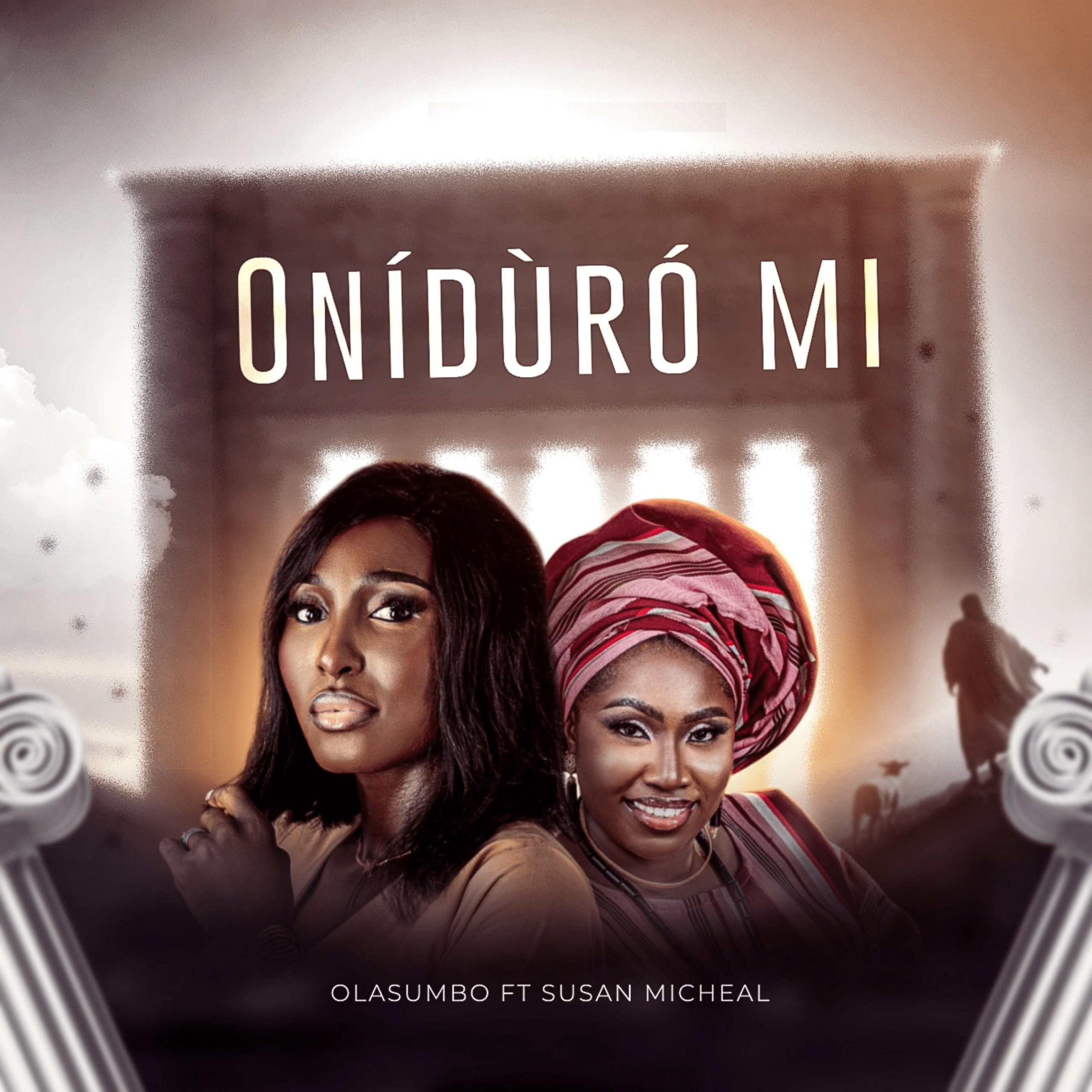
There is a Yoruba word Christian worshippers keep returning to because the English translation never quite carries the same weight: Oniduro.
That repetition is deliberate: the song returns to the word as both its central image and its statement of trust.
“Guarantor” comes close. In ordinary English it is the person who promises to stand behind somebody else’s obligation. In Yoruba Christian worship, Oniduro carries that idea into a relationship with God: the one the worshipper trusts to stand behind them, defend them and remain dependable.
Olasumbo’s new single, featuring Susan Michael and produced by Mr Time, builds the whole song around that idea. The confidence is straightforward rather than theatrical: God has been dependable, so the singer is giving thanks.
What the Song Is Doing
Oniduro opens in English before it opens its full depth. The first movement “With You in my life, I know I’ve got nothing to worry” establishes the theological position plainly. Not as a declaration made against doubt, the way worship songs sometimes reach for assurance because the doubt is actually present. But as a statement of settled fact, nothing to worry. The Yoruba that follows, “o nshomi,” confirms this it is not even worth the trouble of worry.
The song moves between English and Yoruba with the ease of someone thinking in both languages simultaneously, which is exactly how multilingual Nigerian Christian worship actually operates. The English verses give the global frame. The Yoruba body gives the specific cultural and spiritual weight.
Oniduro mi Ese o , My Guarantor, thank you. Agbejoro mi Ese o, My Defender, thank you.
The call-and-response chorus is where the song feels most communal. The singer names what God has done; the response turns that declaration into thanksgiving. That structure is familiar in Yoruba worship, and the song uses it without trying to modernise it for effect.
” Mo wa dupe ore a na ” I have come to give thanks for this favour. ‘‘ Emi dupe ore oni ”I give thanks for today’s favour. ”Mo tun dupe ore Ola” I also give thanks for tomorrow’s favour.
That third line gives the song one of its clearest expressions of faith: giving thanks for tomorrow’s favour before tomorrow has arrived. Within the worshippers’ theological frame, this is an act of trust in God’s dependability, not a claim that every future event is predictable or that hardship is impossible. The lyric turns confidence in the divine guarantor into a practice of gratitude.
The Yoruba Verses and What They Say
The second movement of the song switches almost entirely to Yoruba and the language carries weight that the English verses deliberately leave space for.
The Yoruba section is where the song becomes most specific about what the word Oniduro means in practice.
“Atoni gba, ma gba nkankan lowo Eni” the one who receives but takes nothing from anyone. This is a specific declaration about the nature of God in Yoruba theological vocabulary. Not merely powerful but specifically independent receiving praise without being diminished by the one giving it, needing nothing from the worshipper that he does not already possess.

“Ala ijile to ti wa lati ipinle se, K’atofaye sole lori ofuru Jagado” the dream that came from the throne, that we might walk on the face of the earth in fulfilment. This is the purpose statement embedded in the praise. The song is not just gratitude for what has happened. It is gratitude for the original design that God’s plan for the worshipper was always abundance, and that the praise being offered is itself the recognition of that plan.
The imagery in the central Yoruba section builds systematically. ” Oju iriran mi ” my vision. ” Imole mi ” my light. ”Agbara mi ” my strength. ” Okun mi ” my anchor. These are not decorative praise phrases. They are a careful inventory of the specific roles the Oniduro plays in the life of the worshipper. Each one is a claim made not abstractly but personally. My vision. My anchor. The possessive is doing theological work.
Listen to “Oniduro Mi”
“Asa mi Toto” my complete culture or my full inheritance. In Yoruba the word Asa carries connotations of tradition, inheritance and cultural identity. Placing it in this list of divine attributes is a claim that the God being praised is not separate from Yoruba cultural identity but is woven into it. It is the kind of line that you either hear or you do not, depending on whether the language carries its full weight in your ear.
Olasumbo, Susan Michael and Mr Time
The collaboration works because the two voices do different jobs. Olasumbo carries the declaration; Susan Michael softens it and makes the response feel communal rather than solitary.
Producer Mr Time keeps the arrangement restrained. The guitar interlude after the second chorus gives the vocals room before the outro returns to the central praise. It is a small production choice, but it keeps the song from becoming overcrowded.
The outro returns to the Yoruba affirmation “Atoni gba ma je bi eni kankan kankan, Oniduro mi Ese oo” the one who receives, let no one mistake them for just anyone. It is a closing declaration of God’s uniqueness, set against the simplest possible musical backdrop. The song ends where it should end. Not with a climax but with certainty.
Why This Song Matters Right Now
Nigerian gospel music has been having a significant cultural moment. The Adeyinka Alaseyori and Oniduromi controversy in 2021 brought the word Oniduro into a national conversation about theological precision and the responsibility of worship. Sinach‘s Way Maker became an international worship song, illustrating how a record built around direct, memorable language can travel across congregations and markets while retaining its central message.
Olasumbo and Susan Michael‘s Oniduro arrives in that context after the word has been examined, after the conversation about what it means to call God a guarantor has been had publicly. The song does not respond to that controversy or engage with it directly. It simply demonstrates what the word sounds like when it is used by someone who means it without qualification.
Yoruba gospel songs can travel across denominational lines when their language and musical arrangement resonate with different congregations. Oniduro Mi draws on a familiar vocabulary of trust and thanksgiving, although its reception across churches will depend on individual listeners and worship communities.
The best thing about the record is that it does not over-explain itself. The Yoruba carries the cultural meaning; the melody carries the emotion. A listener who understands the language gets the full theological argument, while everyone else can still hear the confidence in the performance.
Oniduro mi Ese o.
My Guarantor, thank you.
The song says it properly. For broader context on Nigeria’s music ecosystem and how culture, artists and industry structures connect, see our Nigerian music business guide.